
A natural solution for breathing, posture, and facial structure.
The one thing your jaw was designed to do. Modern food stopped letting it. Mastic puts it back.
Myofunctional therapy. In your hands.
Myofunctional therapy is the practice of retraining the muscles of the mouth, face, and airway. Tongue posture. Nasal breathing. Bilateral chewing. It is used by speech therapists, sleep specialists, dentists, and orthodontists to fix problems most people do not realise they have.
The tongue. The palate.
Resting tongue posture on the roof of the mouth shapes the upper jaw. Low tongue posture lets the palate narrow and the face fall in on itself. Myofunctional therapy retrains this.
The breath. The airway.
Nasal breathing opens the airway, signals proper jaw development, and feeds nitric oxide into the lungs. Mouth breathing narrows the face, dries the airway, and disturbs sleep.
The bite. The jaw.
Bilateral hard chewing trains the masseter and the temporalis. The muscles that hold structure. The muscles modern food never asked for.
Mastic is the only natural instrument that does the third pillar. The hardest chew on earth.
One generation of soft food. One collapsed face.
Pre-industrial people chewed their food for hours a day. The jaw bone grew wide. The teeth grew straight. The airway grew open. Modern food is soft from birth. The masseter never develops. The jaw stays narrow. The airway stays small. The face stays underdeveloped. This is the most-documented and least-discussed health shift of the last century.
Bone follows force. The face follows the bite.
The third pillar of myofunctional therapy is mechanical load on the jaw. Mastic is the one natural medium dense enough to deliver it.
The masseter develops
Hard, repetitive chewing thickens the masseter. The visible result is a defined jawline. The structural result is a wider lower face and stronger occlusion.
The maxilla widens
Mechanical load on the upper teeth signals the maxilla to grow wider and more forward. Wider palate, open airway, proper tongue space. The face you were designed to have.
The breath corrects itself
Hard chewing forces the mouth closed and the tongue up. It is the most direct way to retrain nasal breathing without thinking about it.
Myofunctional therapy is practised worldwide.
Across continents, the same protocols. The same muscles. Mastic is the one ingredient that travels with the practice everywhere it is taught.
The Stanford pioneer
Dr Christian Guilleminault, the late sleep medicine physician at Stanford, established myofunctional therapy as a validated treatment for obstructive sleep apnea. His protocols are still cited globally.
The São Paulo school
Brazil produced the world's largest body of orofacial myology research. University programs there train clinicians from across Latin America, Europe, and Asia in the same chewing-and-tongue protocols.
The Tokyo tradition
Japanese orthodontics has used masseter training as a first-line intervention for mandibular development for over forty years, predating Western adoption by a generation.
The AOMT consensus
The Academy of Orofacial Myofunctional Therapy now certifies practitioners across four continents. The same protocols, the same muscles, the same outcomes.
Myogum is what happens when the clinic comes home. Five minutes a day. The third pillar, in a jar.

Five minutes. One jar. Every day.
Mastic, chewed bilaterally with the tongue on the palate, is myofunctional therapy. The practice is the product. The jar is the gym.
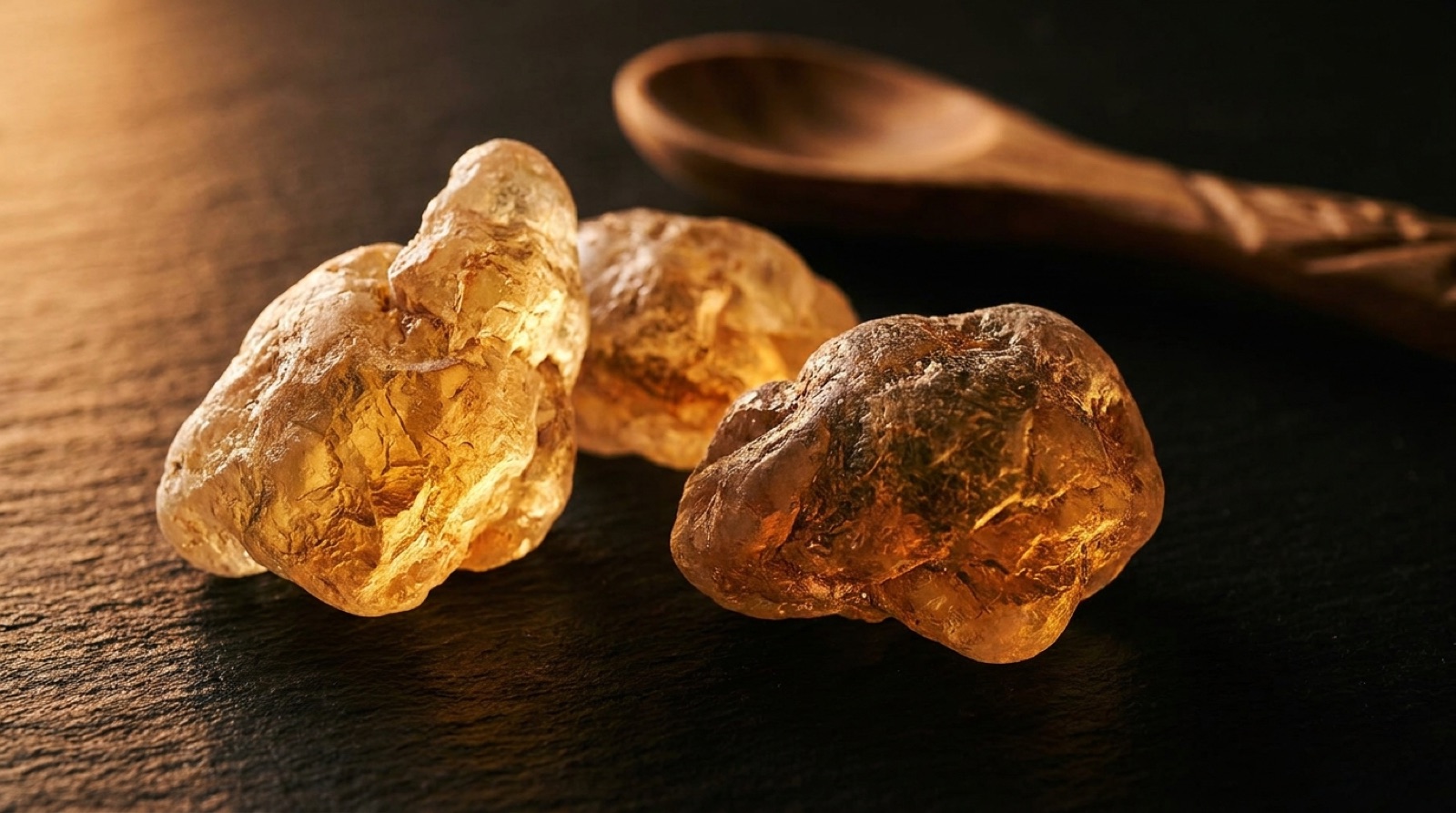
The hardest natural chew on earth.
Synthetic gum softens in seconds. Mastic stays firm for minutes. It is a fossilised resin, harvested from a single tree species, and it is the only natural substance dense enough to give the masseter a real workout.
Progressive resistance
Mastic begins as a hard, crumbly crystal. It softens slowly as you chew. The resistance is highest at the start and stays meaningful throughout. That is what training looks like.
Zero synthetic ingredients
One ingredient. Tree resin. No plasticisers, no artificial sweeteners, no fillers, no microplastics in your mouth.
Documented digestive benefits
Mastic has been shown in clinical research to suppress H. pylori, support gut lining repair, and reduce dyspepsia. The European Medicines Agency recognises it as a traditional herbal medicinal product.
Coming Soon
Everyone else uses plastic.
We use glass.
Every other mastic brand ships in plastic. Plastic pouches. Plastic bags. Plastic tubs. The product designed to clean and strengthen your mouth, sitting in a container that leaches microplastics into the very thing you put in it. We refuse to do that.
Every other brand sells small droplets. The tiny pellets the harvest sorts as the cheap grade. We hand-pick only the large, dense pellets. Larger pellets give a better resistance profile, which means better muscle development, and a more effective fix for the underlying myofunctional problem. Bigger pellet, more work, more result.
The myofunctional chew.
Mastic is not regular gum. The technique is the therapy. Follow the protocol. Five to ten minutes. Once a day.
Dose
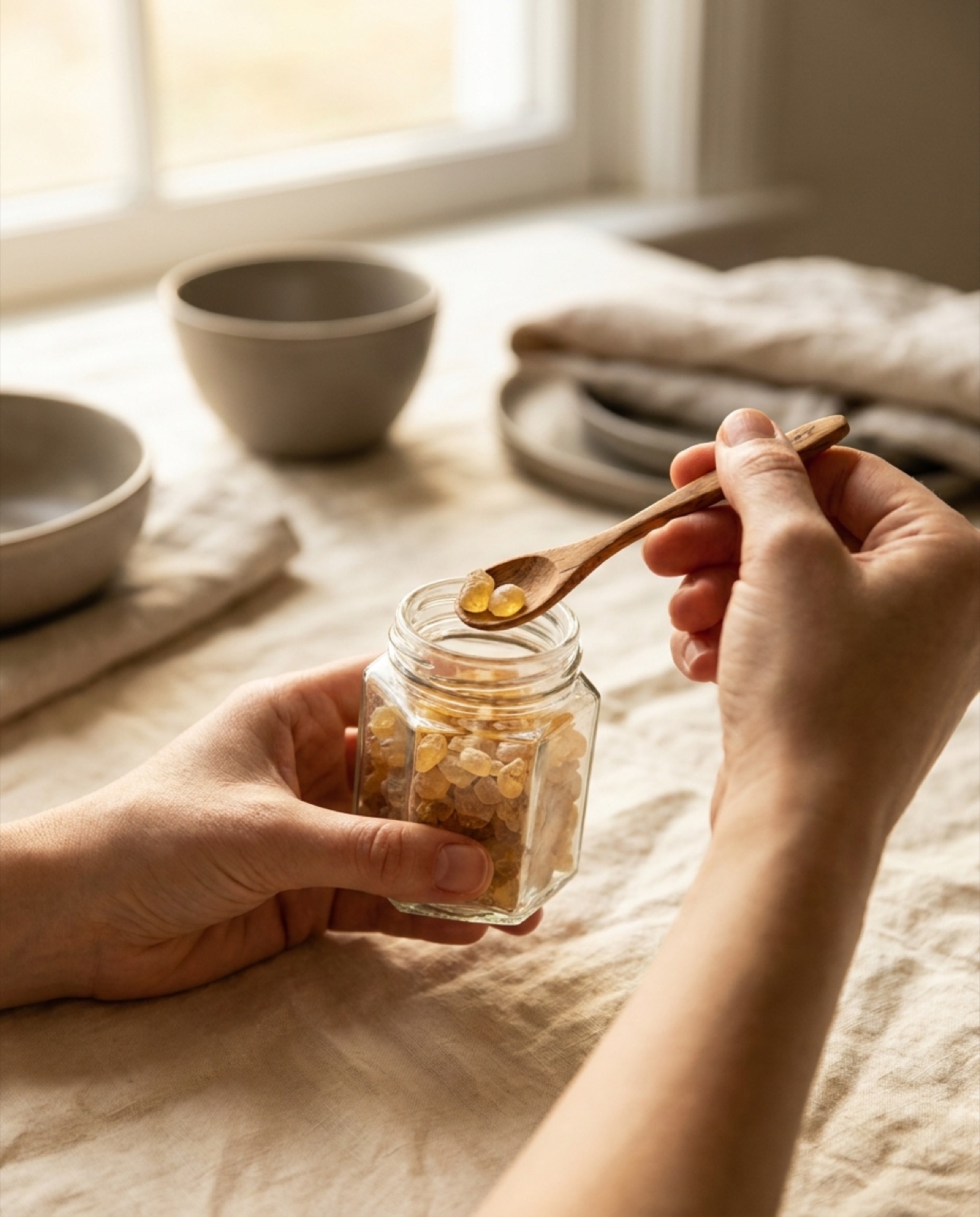
Use the wooden spoon. Three to five large pellets. Start on one side of the mouth. The initial crunch is part of the training.
Soften
Chew slowly for the first one to two minutes. The crystal turns to pliable resin. The bitter note fades into clean pine and cedar.
Alternate sides
Bilateral training. Switch sides every two to three minutes. Tongue on the palate between chews. Lips closed. Nasal breathing throughout.
Duration
Five to ten minutes per session. One session daily. The resin stays firm throughout. Discard after use.
Why it works: Bilateral hard chewing trains the masseter, signals maxillary development, retrains tongue posture, and forces nasal breathing in one practice. Five minutes daily is more myofunctional work than most people do all year.
Not all mastic is equal.
| Feature | Other brands | Myogum |
|---|---|---|
| Packaging | Plastic pouch or tub. Microplastic risk. | Hexagonal glass jar. Zero microplastic. |
| Pellet size | Small cheap droplets, the harvest's bottom grade. | Large premium pellets, hand-sorted. |
| Source | Often unverified. Mixed grades. | Pure PDO certified mastic. |
| Dosing | Pour and guess. Fingers on resin. | Wooden spoon included. |
| Additives | Sometimes blended. | One ingredient. Pure resin. |
| Container | Disposable. Lands in landfill. | Refillable. Lives on your counter. |
| Designed for | Chewing. | Myofunctional training. |
PDO certified. Sourced from Chios.
Pistacia lentiscus var. Chia grows on one island in the world and produces real mastic resin. EU Protected Designation of Origin. Hand-harvested. That is all you need to know about where it comes from. The practice is the product.
One jar. One practice.
Myogum is a single product. A hexagonal glass jar of premium large mastic pellets. A wooden dosing spoon. A practice you do once a day for five to ten minutes. That is the entire product. There is nothing else to add.
Coming Soon
Five minutes a day.
The face you were designed to have.
One jar. Premium large pellets. The wooden spoon. The myofunctional practice in your hand.